- Home
- Learn
- About Cary History
- Oral History
Cary Heritage Museum Oral History Project
Transcripts | Audio Files |
In the early seventies, a group of citizens came together in the-then-small, southern town of Cary, North Carolina to preserve local history and a few treasured structures. In 1974, they formed the Cary Historical Society as a non-profit organization to formally pursue their goals. One of the accomplishments of this group was to record several oral history interviews with a few prominent people of the town. Then the Society began focusing their energies on saving the Page-Walker Hotel from demolition, and most other activities fell by the wayside.
More than twenty years later, the hotel had been saved, along with a few other landmarks in town, and a museum had been built on the third floor of the Page-Walker Hotel. The offshoot group from the Cary Historical Society, known as the Friends of the Page-Walker Hotel, found that with their task accomplished they needed to refocus their energies. So they set new goals to develop a cultural arts program and to preserve local history. Thus, in 1998, an oral history program was launched by the Friends to capture the collective memories about local history from the town's citizens so those stories could be preserved for future generations.When a dozen interviews were completed and transcribed into written form, the original tapes and a copy of the transcriptions were deposited at the Wilson Library at the University of North Carolina in Chapel Hill as part of the Southern Oral History Program. There they will be preserved for the future. The interviews have been made accessible to scholars through the university system so they can be studied. Later, as more interviews were completed, subsequent submissions were made to the library. Cary's oral history program continues today through the efforts of board members of the Friends of the Page-Walker Hotel.
We continue to pursue vehicles to share information with the public to educate, enlighten and entertain them. Many of the interviews have been compiled into a book entitled, Just a Horse-Stopping Place, an Oral History of Cary, North Carolina, by Peggy Van Scoyoc. The book sells for $20.00, and proceeds support the Friends' continuing efforts to preserve Cary's history through the Cary Heritage Museum.
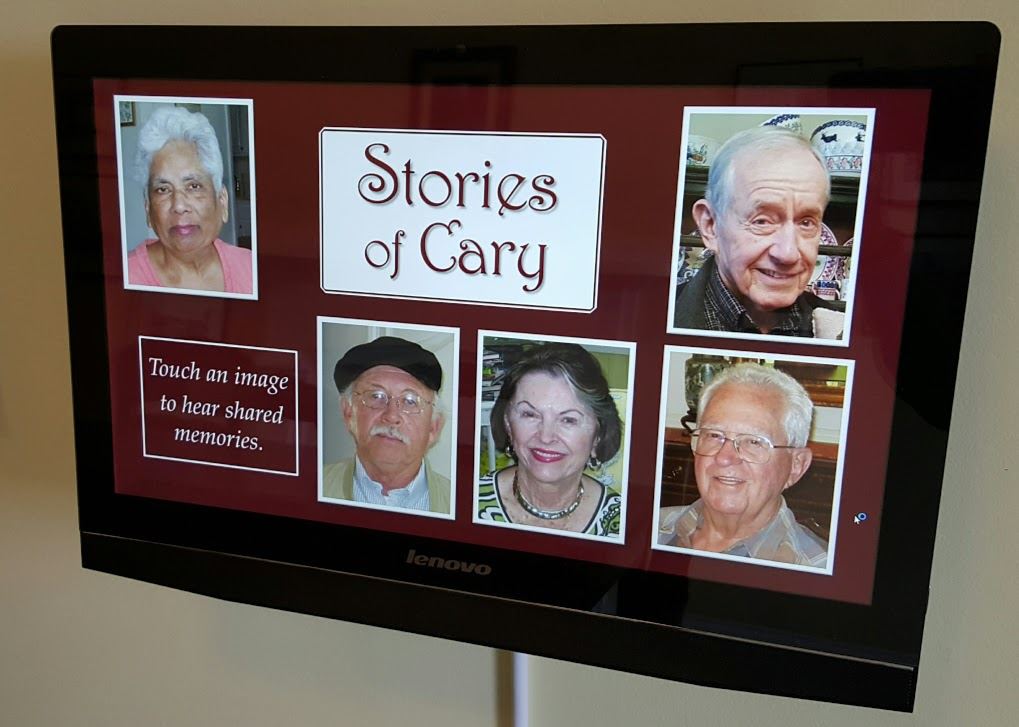 Be sure to visit the oral history station in the second-floor library of the Page-Walker Arts & History Center, where modern technology makes history come to life through the voices of key figures who helped make Cary history. Using recorded oral histories, the touch screen audio-visual station lets visitors choose the pieces of history they want to see and hear, as told by Vijaya Bapat, Bob Heater, C.Y. Jordan, Jean Ladd and Herbert Bailey. The new technology enables this content to be changed and expanded so that other oral histories can be played in the future.